Gimbap (Korean Seaweed Rice Rolls)
Rice and colorful fillings rolled in seaweed and sliced into rounds — the food Koreans pack for school trips, hikes and road trips.
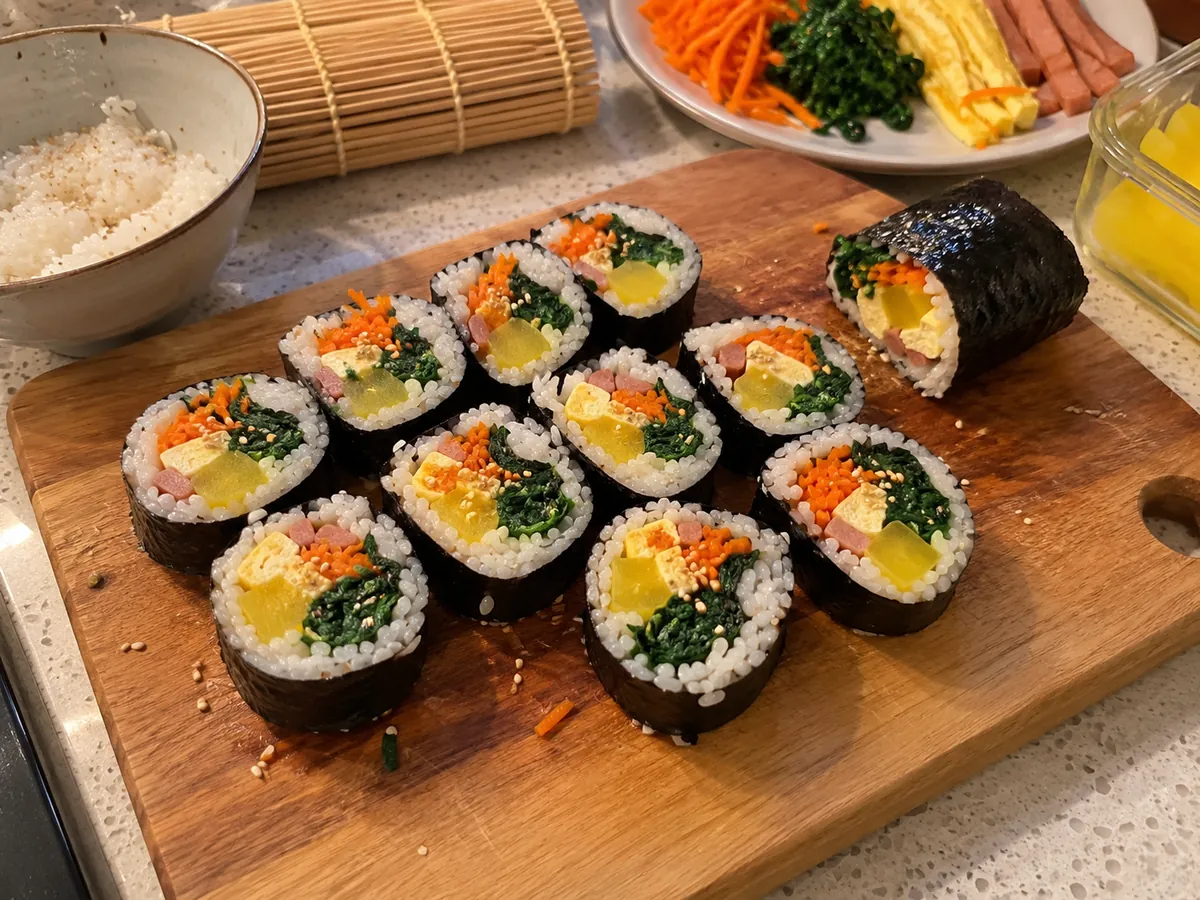 AI illustration
How to make it
- Season the riceMix the warm rice with the sesame oil and salt. Let it cool until just warm.
- Make the fillingsBeat the eggs with a pinch of salt, fry a thick omelet and cut it into long strips. Stir-fry the carrot with a pinch of salt for 1 minute. Blanch the spinach for 30 seconds, squeeze dry and season with salt and sesame oil. Pan-fry the ham for 1 minute.
- RollPlace a seaweed sheet shiny side down on a bamboo mat. Spread a quarter of the rice thinly, leaving 3 cm free at the top. Line up the fillings near the bottom and roll tightly, pressing as you go.
- SliceBrush the outside with a little sesame oil. Wet a sharp knife and cut each roll into 8 pieces.
Thin rice, tight roll
A thin, even layer of rice is what keeps the roll from falling apart. Use slightly wet hands to spread it.
Clean cuts
Wipe the knife with a damp cloth between cuts so the rice does not drag.
The picnic food
“Gim” is seaweed and “bap” is rice. Parents in Korea get up early to roll gimbap on school field-trip days — many Koreans remember the smell of sesame oil on those mornings.
Pairs well with
 AI illustration
Tteokbokki
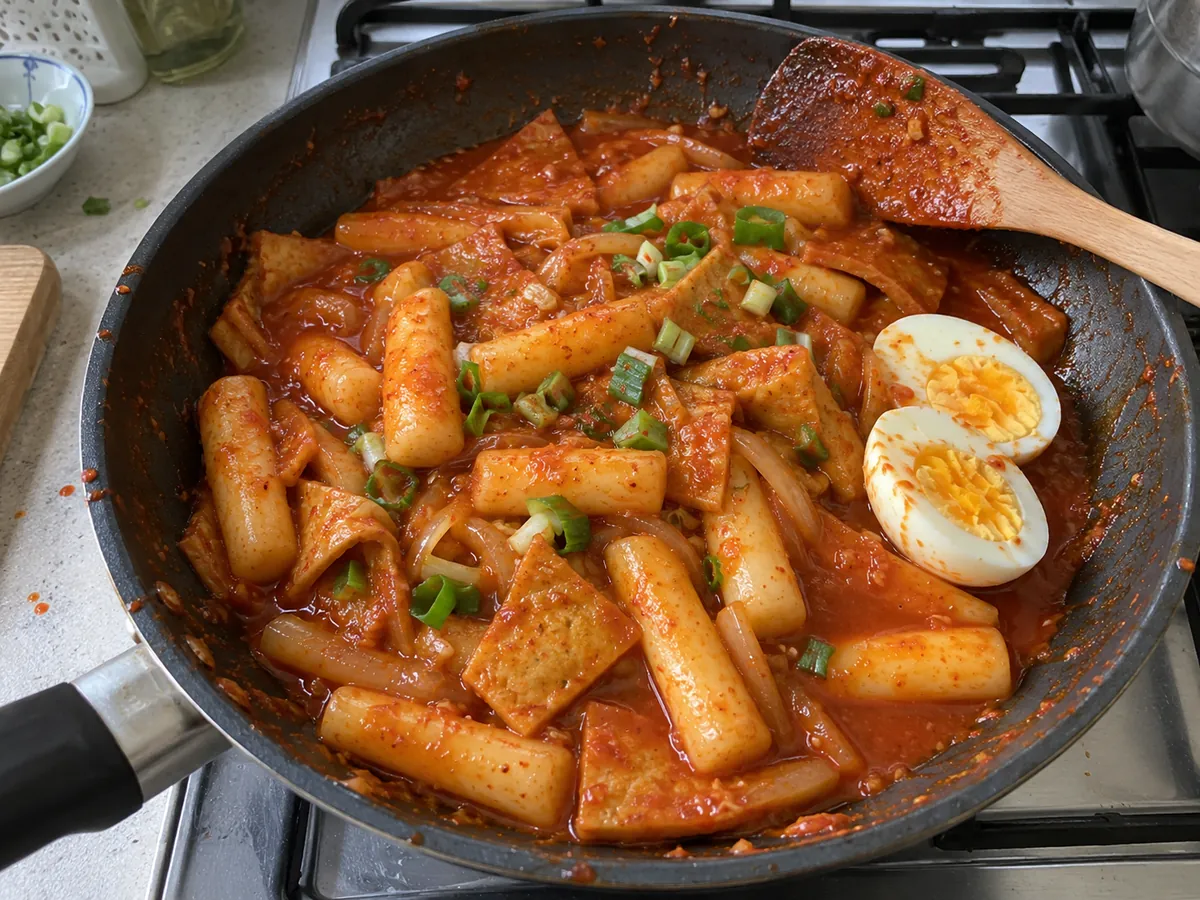
Chewy rice cakes in a sweet, spicy, glossy sauce — the red street snack sold from tents and stalls all over Korea.
 AI illustration
Eomuk-bokkeum
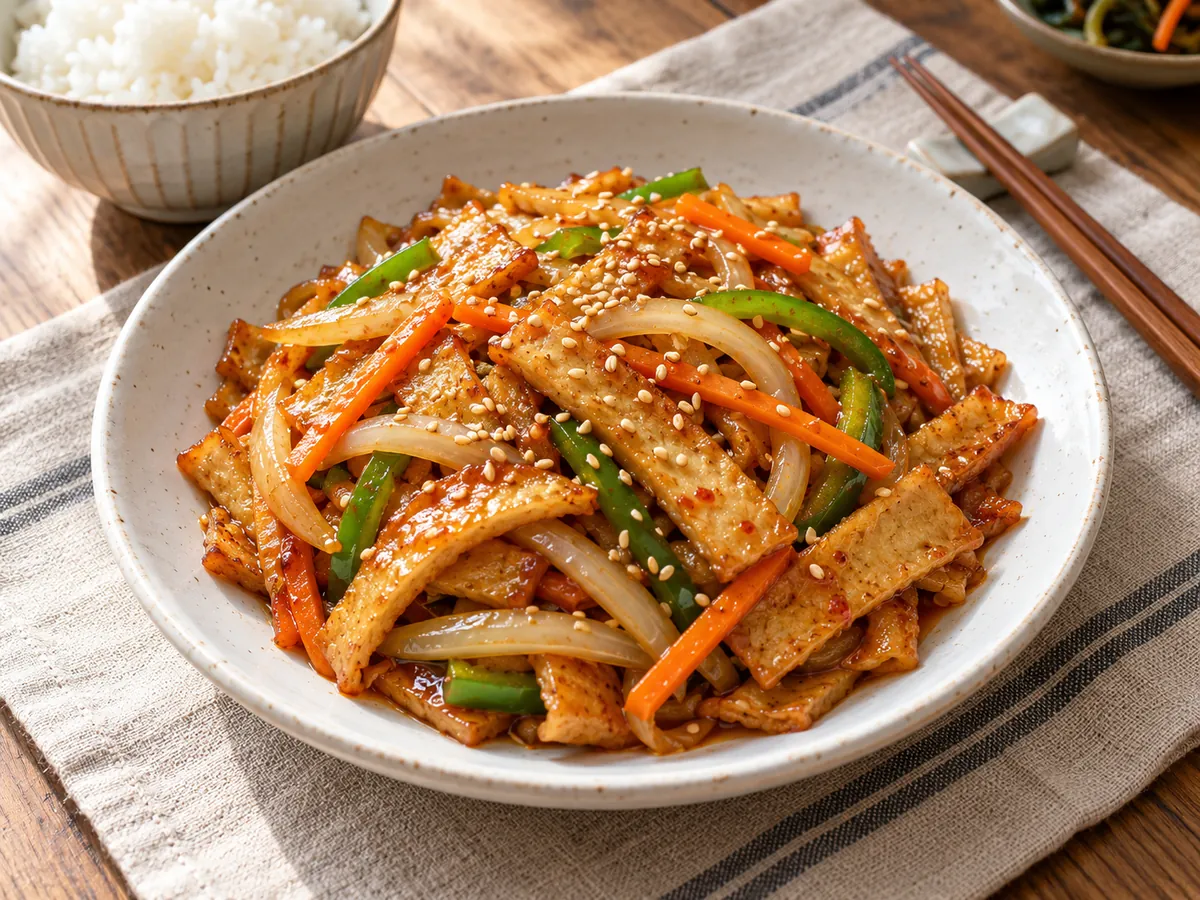
Sweet, salty and a little glossy — the side dish in countless Korean lunchboxes. Fifteen minutes, one pan, and it keeps for days.
 AI illustration
Kimchi Jjigae
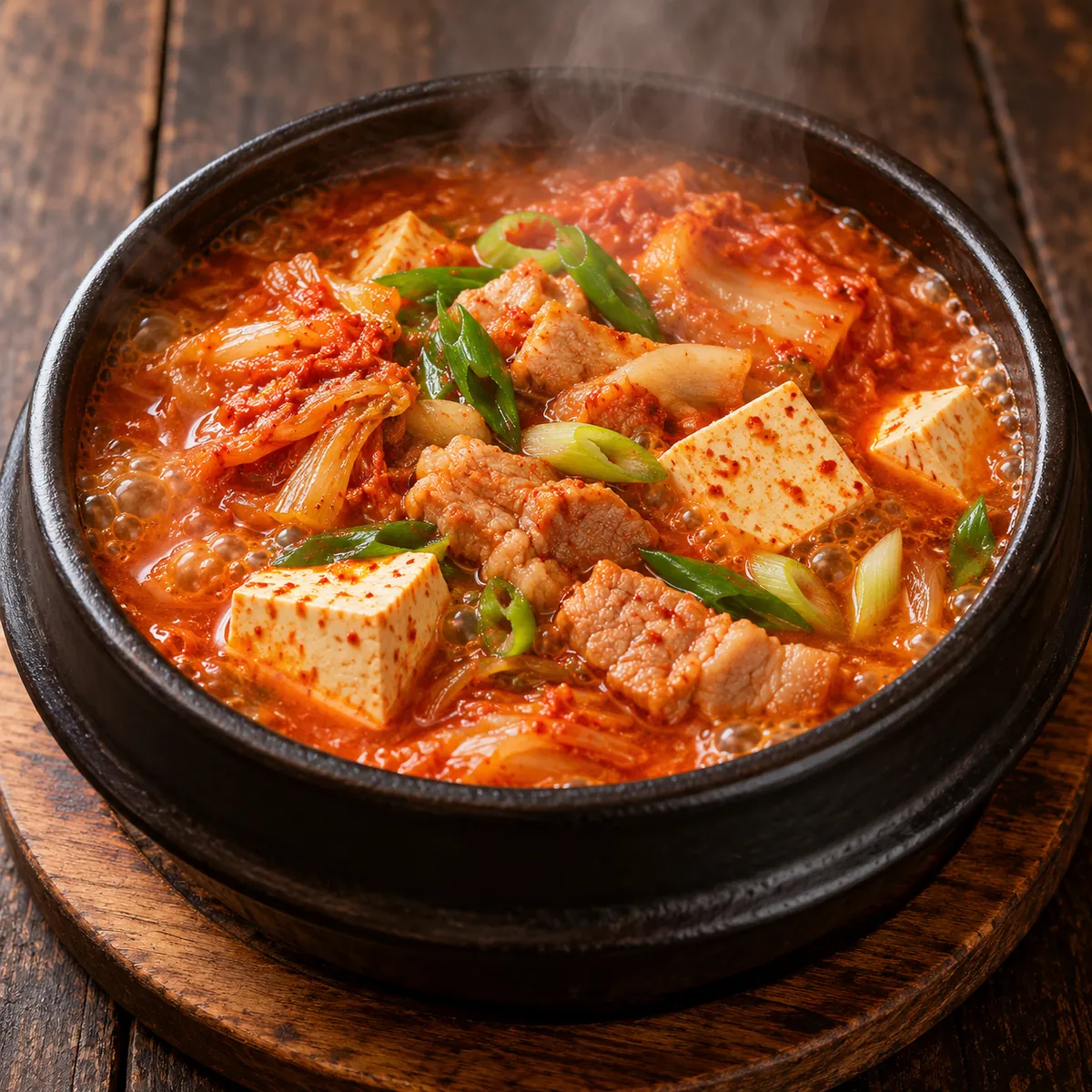
The stew Koreans make when the kimchi turns sour — and the one that brings everyone back to the table. Well-fermented kimchi is the secret.