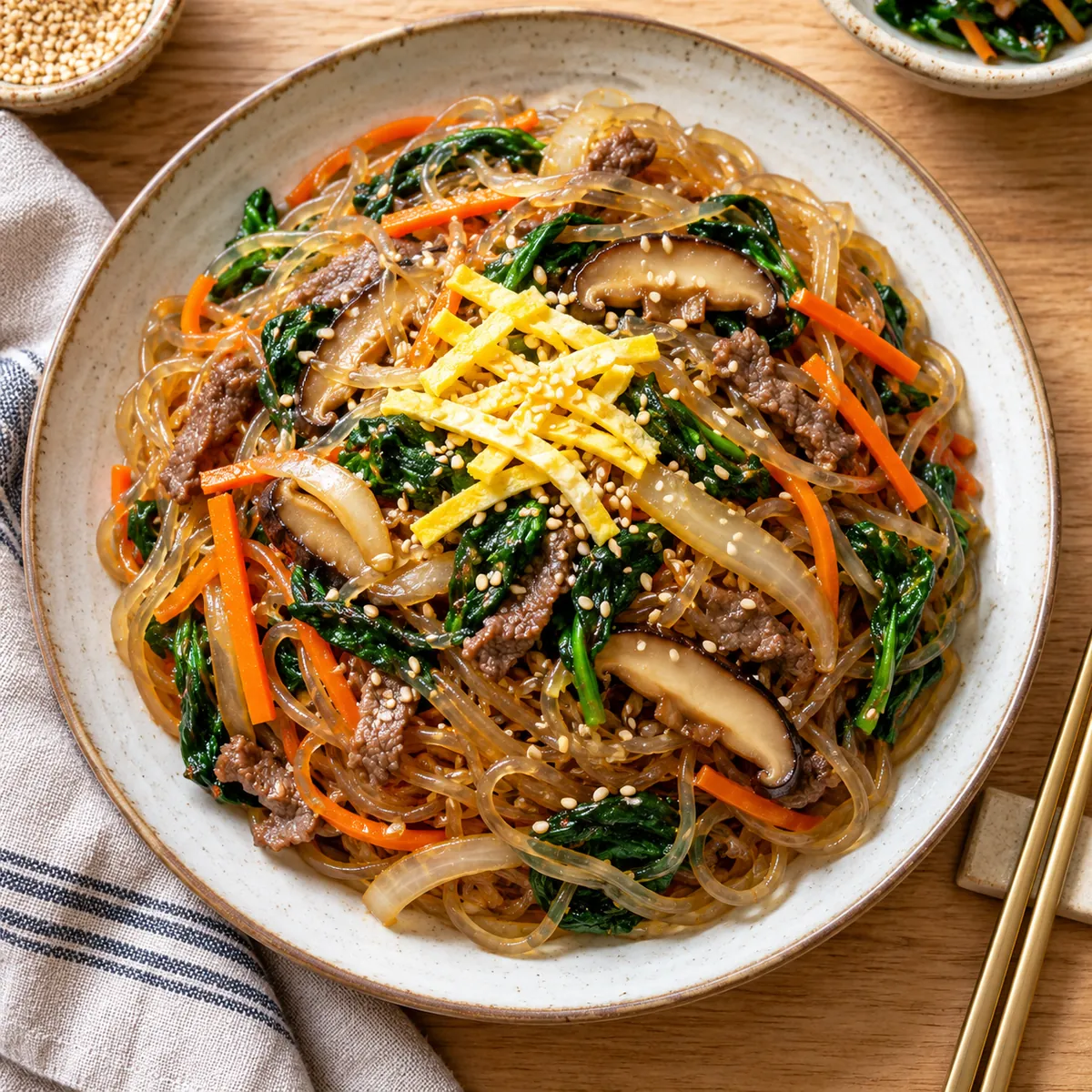
Japchae (Korean Glass Noodles with Vegetables)
Chewy glass noodles, colorful vegetables and a sweet-savory soy dressing — the dish on almost every Korean holiday and birthday table.
 AI illustration
How to make it
- PrepareMix the beef with the marinade and leave for 10 minutes. Blanch the spinach for 30 seconds, rinse in cold water, squeeze dry and season with a pinch of salt and a few drops of sesame oil.
- Cook the noodlesBoil the noodles for 6–7 minutes (check the package), drain, cut a few times with scissors and toss with 1 tbsp of the dressing so they do not stick.
- Stir-fry each partIn a little oil, stir-fry the onion and the carrot separately with a pinch of salt for 1–2 minutes each. Then cook the beef and mushrooms together until done.
- Toss and garnishCombine everything with the rest of the dressing in a large bowl. Taste, then top with thin strips of fried egg and sesame seeds.
Cook each vegetable separately
It looks fussy, but it keeps every color bright and every texture right — the way Korean cooks make it for holidays.
Leftovers
Keeps 2 days in the fridge. Warm it in a pan with a splash of water, or eat it at room temperature.
A royal dish that gained noodles
Japchae means “mixed vegetables”. It began as a vegetable dish at the Joseon royal court in the 1600s; glass noodles were added in the early 20th century, and now it is a staple of celebrations.
Pairs well with
 AI illustration
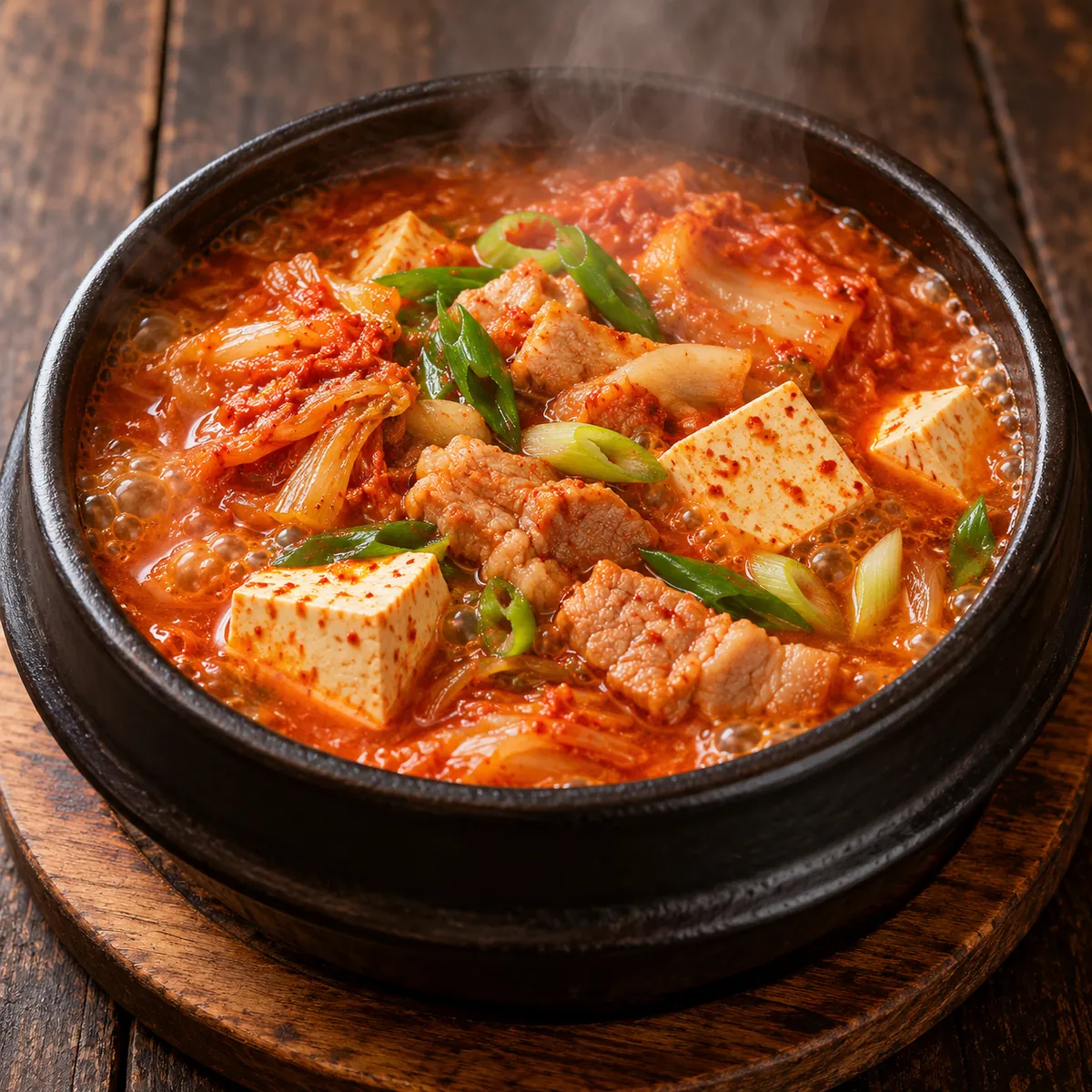
Kimchi Jjigae
The stew Koreans make when the kimchi turns sour — and the one that brings everyone back to the table. Well-fermented kimchi is the secret.
 AI illustration
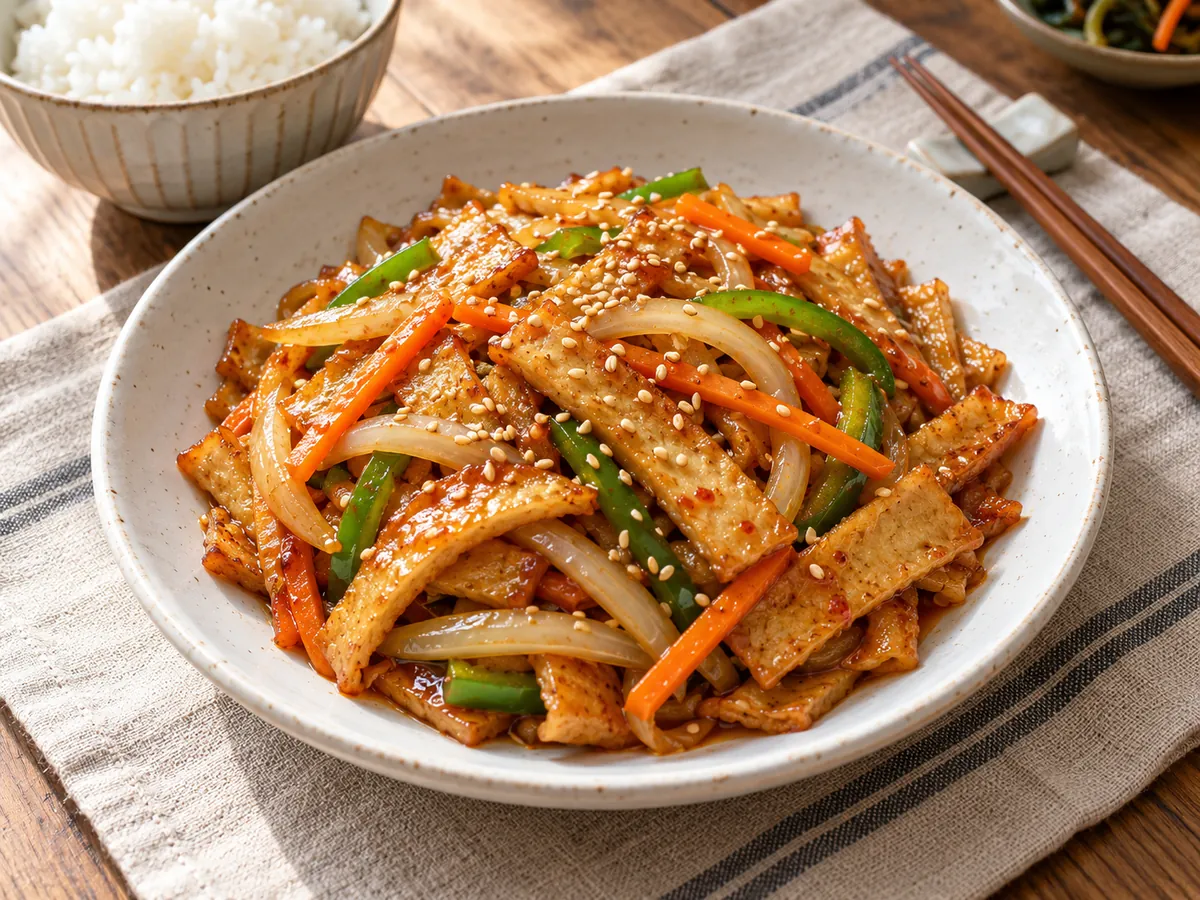
Eomuk-bokkeum
Sweet, salty and a little glossy — the side dish in countless Korean lunchboxes. Fifteen minutes, one pan, and it keeps for days.
 AI illustration
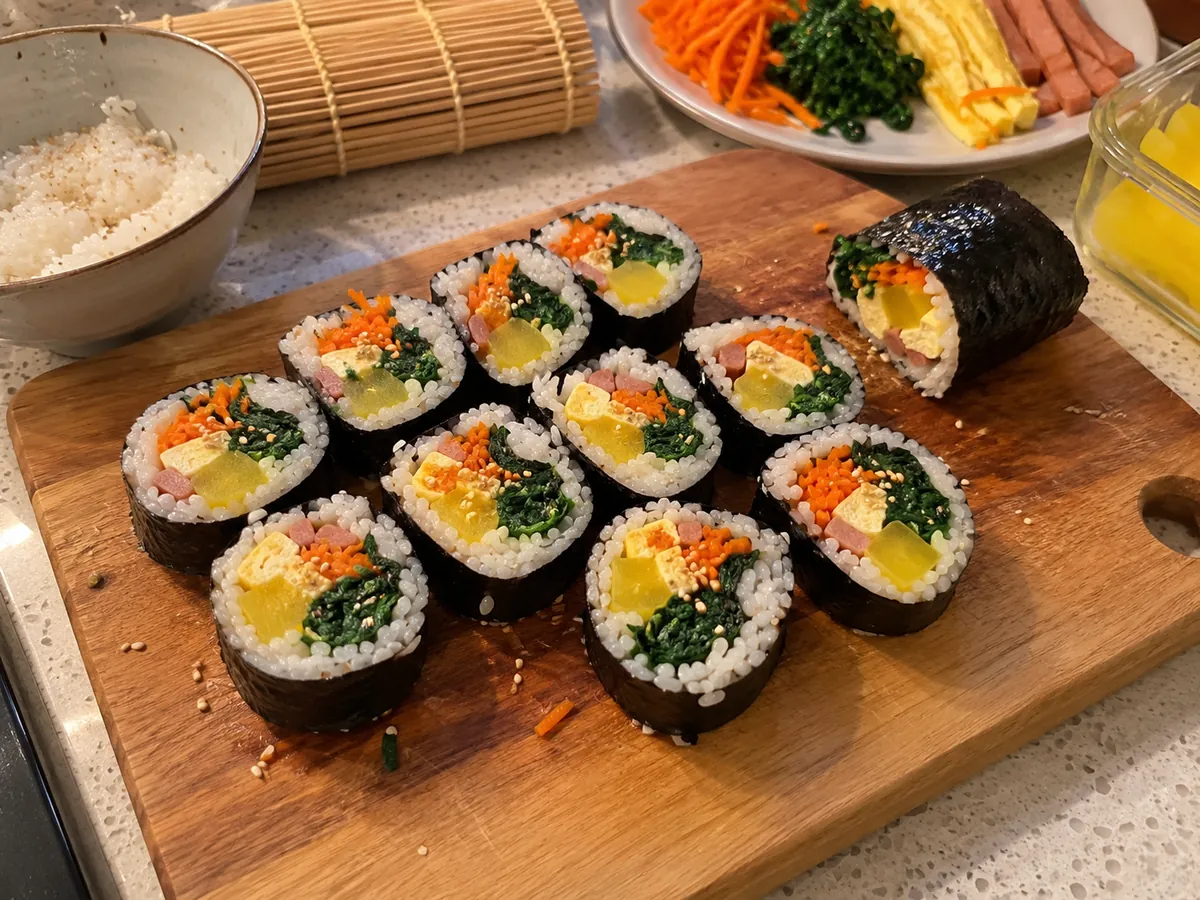
Gimbap
Rice and colorful fillings rolled in seaweed and sliced into rounds — the food Koreans pack for school trips, hikes and road trips.