Food You See in K-Dramas (and How to Make It)
The dishes that keep appearing in Korean dramas, what they mean in Korean daily life, and recipes to cook them at home.
 AI illustration
Korean dramas are full of food scenes, and the same dishes appear again and again because they carry meaning in everyday life. Here are the ones you will spot most often — no spoilers, just the food.
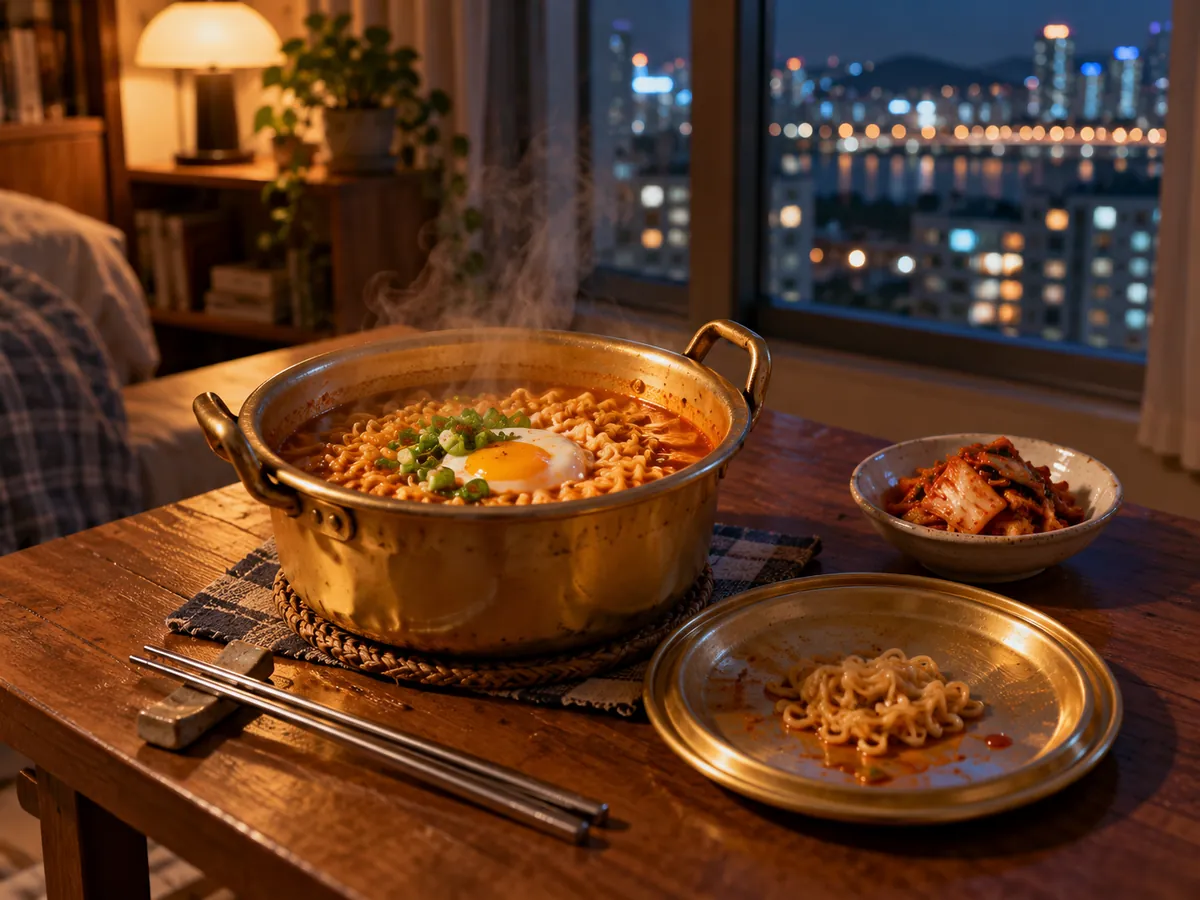
Ramyeon from the pot, late at night
Eaten straight from a small aluminum pot, with the lid as a plate. It means comfort, a late night, or an invitation to stay a little longer.
Late-night Pot Ramyeon — Recipe →
Kimchi jjigae at the family table
A bubbling pot in the middle of the table, shared by everyone. When a character comes home, this is often what is waiting.
Tteokbokki from a street stall
Friends eating standing up at a stall or a tent bar (pojangmacha) — red rice cakes, fish cake skewers and hot broth.
Samgyeopsal and soju after work
Pork belly grilled at the table, wrapped in lettuce with garlic and sauce (ssam), with small green bottles of soju — the classic after-work dinner with colleagues.
Jjajangmyeon on moving day
Black bean noodles delivered to a new home full of boxes. Ordering jjajangmyeon on moving day is a long-standing Korean habit: it is quick, cheap and needs no kitchen.
Seaweed soup on a birthday
Miyeokguk, seaweed soup, is eaten on birthdays and by mothers after giving birth. If someone in a drama cooks it for another character, it is a quiet sign of care.
Gimbap for a picnic
Rolls of gimbap in a box on a school trip, a hike or a date by the river.
Chimaek: fried chicken and beer
“Chi” from chicken, “maek” from maekju (beer). Delivered late at night, eaten in front of the TV or by the river in summer.